This is default featured slide 1 title

Go to Blogger edit html and find these sentences.Now replace these sentences with your own descriptions.This theme is Bloggerized by Lasantha Bandara - Premiumbloggertemplates.com.

This is default featured slide 2 title

Go to Blogger edit html and find these sentences.Now replace these sentences with your own descriptions.This theme is Bloggerized by Lasantha Bandara - Premiumbloggertemplates.com.

This is default featured slide 3 title

Go to Blogger edit html and find these sentences.Now replace these sentences with your own descriptions.This theme is Bloggerized by Lasantha Bandara - Premiumbloggertemplates.com.

This is default featured slide 4 title

Go to Blogger edit html and find these sentences.Now replace these sentences with your own descriptions.This theme is Bloggerized by Lasantha Bandara - Premiumbloggertemplates.com.

This is default featured slide 5 title

Go to Blogger edit html and find these sentences.Now replace these sentences with your own descriptions.This theme is Bloggerized by Lasantha Bandara - Premiumbloggertemplates.com.

Monday, November 21, 2011

Renault confirms new standalone coupe model

Click Thumbnails to Enlarge
Renault confirms new standalone coupe model; will be influenced by the Renault Dezir concept

Renault confirms new standalone coupe model

By Ben Pulman
Motor Industry
13 September 2011 22:30
Renault has confirmed that it’s working on a new coupe model, to sit above the Megane Coupe, but to be sized and priced below the existing Laguna Coupe. Work only began late in 2010, but there will be a Renaultsport version and the Alpine name may feature.

What do new know about this new Renault coupe?

The current Laguna Coupe has been both positioned and priced too close to cars like the A5 Coupe, admitted Renault’s product planning boss Beatrice Foucher. Work is underway on the next-gen Laguna and Sport Tourer estate, but a replacement for the good-looking Coupe isn’t in the pipeline.
Instead, Renault is developing a new standalone coupe model, to sit below the Laguna Coupe’s existing price point, but above that of the Megane Coupe. It will utilise the new Renault-Nissan flexible, modular C/D platform that will underpin the Laguna (and next Megane), but it won’t have the same wheelbase as the bigger saloon and estate.
‘We always need at least one coupe in the line-up,’ said Foucher. And Renault knows it needs this sporty, dynamic coupe to act as a halo model for the rest of the range, which are starting to be imbued with Laurens van den Acker’s new emotional design language. The facelifted Twingo was unveiled at the Frankfurt motor show, the entire Megane and Scenic ranges will be revised next year, and the first all-new van den Acker car will be the new Mk4 Clio. (The new Clio – to be revealed at the 2012 Paris motor show in 12 months time – will only be available as a five-door, while the Megane will continue as both a three-door Coupe and five-door hatch). Expect the new coupe to stylistically borrow very heavily from the Dezir concept car (pictured, right).

What about this Renaultsport connection?

Renaultsport has been involved in the project from the start – rather than coming in at a later date as has been the norm – helping to set the suspension, wheelbase and other requirements (we hear the combined dimension of the tyre and alloy wheel will be a maximum of 700mm, or 27.5in), but RS won’t develop the new car like it did the Wind. Instead, Renault’s technical department will handle the engineering. It’s still in discussion, but the Alpine name has been mooted inside Renault for this car.  
Renault sets the volumes and prices for its models four to five years in advance of production, but Foucher wouldn’t reveal anything. However, expect something around £20k-£25k for the base models, with prices pushing towards £30k for the confirmed Renaultsport version. The new car will be front-wheel drive, but it’ll be a rival for the Toyota FT-86. Renault will renew and relaunch its mainstream models before it launches this new coupe, so don't expect to see anything until 2014 at the earliest.

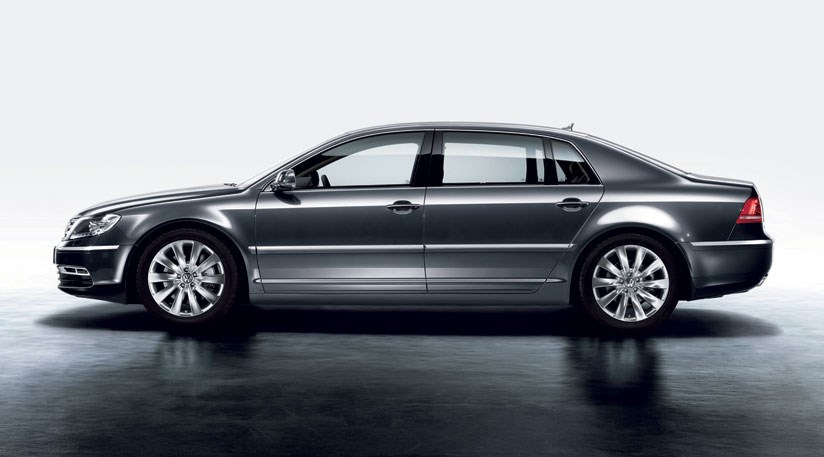
VW Phaeton - the new one coming in 2015

Click Thumbnails to Enlarge
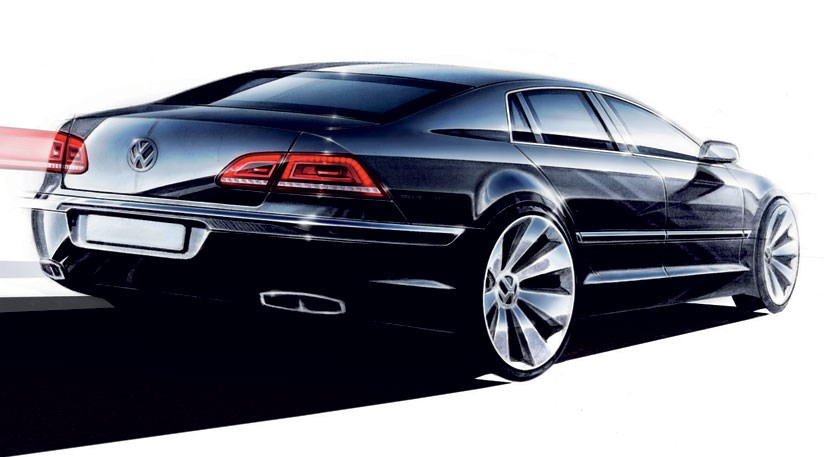
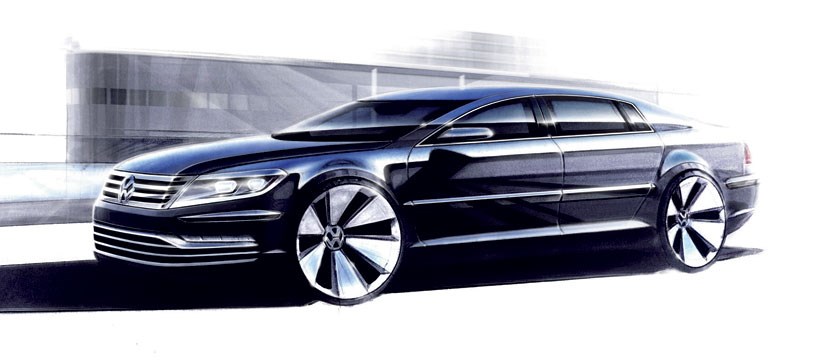
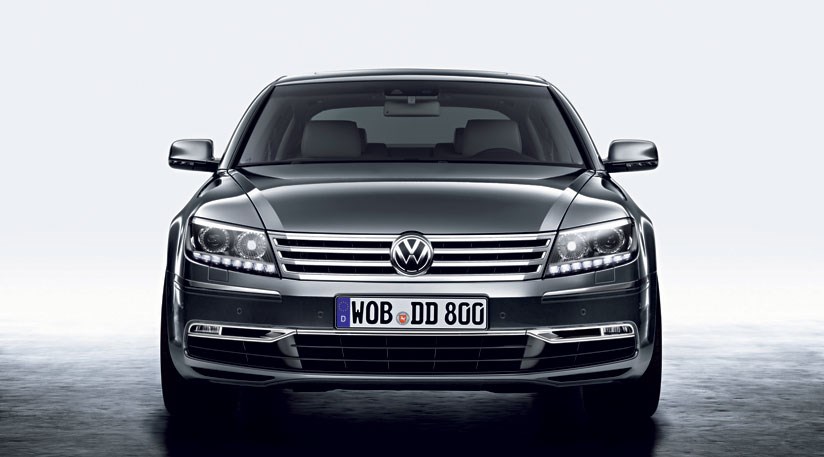
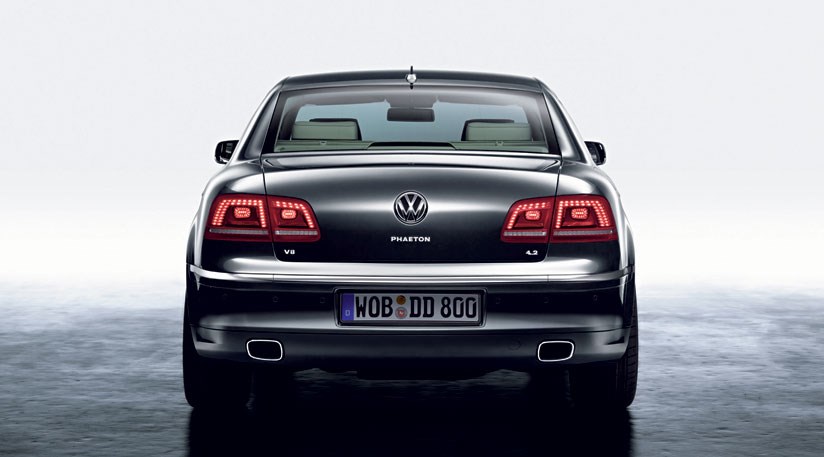
The next VW Phaeton is due in 2015. This is actually a design sketch for the current Phaeton

VW Phaeton - the new one coming in 2015

By Georg Kacher
Motor Industry
21 September 2011 14:01
A brand new Volkswagen Phaeton Mk2 will be launched in 2015, based on a new architecture being masterminded by cousins Audi. Dubbed VW631, the new VW Phaeton will be based on MLM Evo (modular longitudinal matrix) which makes provision for a plug-in hybrid option, an aluminium-intensive body structure and a much more advanced and less nose-heavy dynamic layout.
Although VW chairman Martin Winterkorn has in the past black-flagged the Avantissimo (A8-based) and the Passat Variant Plus (A6-derived), there is still a lot to be said for a second more practical bodystyle in addition to the four-door notch which is almost compulsory in this segment.
Practicality could of course also come in five-door coupé form, but the Volkswagen brand is probably better off with a more pragmatic shape that would be roomier than a Superb Combi, as sleek as an Avant and as cocoon-like luxurious as the current Phaeton. All we know for sure today is that the Phaeton MkII model will be positioned between A6 and A8, priced below the current Phaeton and be available with a four-cylinder, a hybrid and a pair of high-output sixes.

Why is VW replacing the Phaeton? It's hardly been a sales hit...

Indeed. Unlike its namesake from Greek mythology, the Phaeton never took off, and although marketing moved heaven and earth to bring it closer to the sun, the luxury saloon was always overshadowed by A8, 7series and S-class.
About every second Phaeton was and is used internally, be it as demonstrator, courtesy car or VIP shuttle. According to sales and marketing, the high-end VW failed because it was a no-name product in an extremely prestige-conscious segment, but this explanation does not tell the full story.
Other factors to be considered are the very conservative styling, the relatively poor ride comfort, the totally uninspiring handling and the array of heavy and thirsty V8, V10 and W12 engines.

So what's the Phaeton good at?

Even after the third facelift, the Phaeton can still only field one truly strong point, and that is the beautifully finished cabin which matches any Bentley even though the layout is about as contemporary as a Biedermeier sideboard, and the electronics tend to lag at least one generation behind the leaders.
It is an open secret that the next Phaeton will be styled from the inside out, matching a top-notch but less olde worlde interior to a much more timely exterior. How do we define timely? This is a question VW will have to answer in the course of next year. Before the summer break, three options were being discussed: another three-box notchback, a rather stylish five-door hatchback, and an elegant and luxurious Super-Variant.

The new Phaeton nearly popped up at Frankfurt

Originally, VW intended to test the water at the 2011 Frankfurt motor show, but Wolfsburg decided to reserve the IAA exclusively for the Up. The mooted Concept D, which would have previewed the next Phaeton, has been pushed back to a later date.
The concept D moniker was first used in 1999 for a five-door hatchback version of the Phaeton, which was launched in 2002 in three-box form. Concept D arguably looked better than the real thing, and it may have given the car a more avantgarde image. Instead, VW settled for a boring a big saloon which was from day one out of sync with the brand image.
Initiatives to fix the fate of the flawed flagship included a stillborn Phaeton coupé, a high-roof high-class spaceliner favoured by Bernd Pischestrieder and a radically downsized replacement known as Passat Plus.

Subaru BRZ (2012) - more on FT-86's shy sister


Subaru BRZ (2012) - more on FT-86's shy sister

Subaru BRZ (2012) - more on FT-86's shy sister

By Mark Hamilton
Motor Industry
26 September 2011 09:42

Since the joint venture between Toyota and Subaru was announced in 2009, we've seen four concept cars from Toyota of its version, the FT-86/Scion FR-S. But barring some unfortunate-looking Impreza based engineering mules, we've yet to see the Subaru edition.
That situation didn't change at the recent 2011 Frankfurt Motor Show, where Subaru once again exhibited the rear-drive platform of what we now know will be called the BRZ with a transparent bodyshell rather than production panels.
But Toshio Masuda, Subaru product planning senior general manager and the man in charge of developing the BRZ, gave CAR some extra details on the upcoming mystery coupe…

Is Toyota or Subaru leading development?

If you want to see mild-mannered Subaru executives frown, feel free to mention rumours that Toyota is taking the lead in  development work of the BRZ/FT-86. Masashi Uemura, Subaru's deputy general manager of corporate communications, emphatically denied that the upcoming sports cars were Toyota-led, pointing out that platform and drivetrain development, production engineering and final assembly of both cars was handled by Subaru at Subaru facilities.
To prove his point, he showed video footage of FHI boss Ikuo Mori attending a winter test session of BRZ prototypes at Subaru's Bifuka proving grounds in Hokkaido. In terms of motor show noise Subaru may well seem to be a silent partner to Toyota, but the firm insists it has played a major role in developing the BRZ/FT-86 twins.

Why isn't the BRZ all-wheel drive?

The initial concept for the FT-86 and BRZ came from Toyota, which wanted a rear-drive compact sports car. But although Subaru have a strong history of all-paw performance cars, it has no plans to build a four-wheel drive version of the BRZ. Instead, Masuda-san and his team have treated the BRZ as a challenge in vehicle dynamics. Developing optimum traction, power output and handling for the rear-drive BRZ provides lessons which Subaru's engineers can apply to its regular all-wheel drive models.
And before you ask, no, Masuda-san says Subaru have no plans to add a turbocharger to the BRZ's direct-injection FA20 2.0-litre flat-four engine.

Will the BRZ platform underpin other Subaru models?

The 'Boxer Sports Car Architecture' platform is bespoke for the BRZ and FT-86 and won't be shared with future Subaru models, officials tell CAR. However, lessons from developing the platform, with its super-low 450mm centre of gravity, could well appear in the next generation of Subaru vehicles.

Is the BRZ going to look like the FT-86?

For a company showing a see-through display model, Subaru representatives remained frustratingly opaque about what the BRZ will look like when it's unveiled at the Tokyo motor show in December 2011.
However, given the general shape of the 'BRZ Prologue' model and shared production of both the BRZ and FT-86 on Subaru's Gunma production plant in Japan, sensible money would be on a fairly similar glasshouse and central body for both models, with brand specific front and rear styling.

News watch September 2011: today's auto industry news

CAR's daily guide to the auto industry news stories that matter

News watch September 2011: today's auto industry news

By Tim Pollard
Motor Industry
30 September 2011 09:28

Come to CAR Magazine's news aggregator as we round up the daily stories in the auto industry. Top tip: news summaries are added from the top hour-by-hour

Friday 30 September 2011• Toyota and Honda have both returned to full production after Easter's disastrous earthquake. September car sales will be released next week, and Bloomberg predicts a rise to 12.8 million seasonally adjusted annual rate (Bloomberg)
• The US now predicts a slightly smaller 2011 full-year sales total. Most analysts now agree 12.6 million new car sales are likely - lower than the 13m that had been projected (Detroit News)

Thursday 29 September 2011• Swedish Automobile, owner of Saab, has sold Spyker Cars, the Anglo-Dutch supercar maker. American private equity house North Street Capital has paid around $43 million for the boutique car maker (Automotive News Europe)
• The Spyker sale means that the UK's CPP in Coventry has missed out; it had entered negotiations to buy Spyker, but an MOU had lapsed this summer. Victor Muller will remain chairman of Spyker and the deal hinged on North Street Capital's ability to fund long-term projects
• PSA could be the worst hit by the economic uncertainty, judging by the 41% slump in its shares in 2011, reports ANE. The gap to Volkswagen's stock has accelerated to  €91 - from a 10-year average of  €16 (Automotive News Europe)

Wednesday 28 September 2011• Bentley has a new chief engineer: Rolf Frech, 53, replaces Ulrich Eichorn, who's leaving to become managing director of the VDA, or German association of the automobile industry. Frech has worked at Porsche since 1983 and latterly worked on the Cayenne and Panamera, which will prove useful as Crewe moves into new waters with cars such as its proposed SUV (Bentley Motors)
• General Motors chief exec says that GM Europe is now profitable. Dan Akerson said the turnaround plan was working and they hoped to see further growth after Opel's $102 million pre-tax profit in the second quarter (Automotive News Europe)
• Aston Martin is today named the coolest brand in the UK. London agency Superbrands conducts the most influential survey of consumer tastes and publishes its findings annually (BBC News)
• GM plans to idle its Fort Wayne plant to cut production of full-size trucks. Sales of large pick-ups are still slow in America and GM is balancing its inventories (Automotive News)

Tuesday 27 September 2011• The new Ferrari 458 Spider will be priced at €226,800 in Europe when sales start in October (Automotive News Europe)
• Not content with his duties at General Motors and Lotus, former GM product chief Bob Lutz has joined the board of an American hybrid powertrain company. Via Motors, in Utah, has developed a plug-in hybrid system for pick-up trucks (Automotive News)
• The US Senate has agreed not to cut $1.5 billion from its rescue package to the American car industry. It is pumping money in to encourage the development of fuel efficient cars (Detroit News)

Vauxhall's 2012 Astra cab to be standalone convertible

Vauxhall's 2012 Astra cab to be standalone convertible

Vauxhall's 2012 Astra cab to be standalone convertible

By Tim Pollard
Motor Industry
07 October 2011 11:14

Vauxhall's new convertible will not be the Astra cabriolet, CAR has learned. Instead the new Astra-based convertible will be positioned as a separate, standalone model like Volkswagen's Eos.
The new mid-sized Vauxhall/Opel convertible will be launched in 2012. Expect to see it next summer, with UK sales kicking off later in the year. Just in time for another Indian summer, hopes Vauxhall.

Vauxhall's new 2012 convertible. What else do we know?

Vauxhall and Opel issued this design sketch a few months ago. We know the new standlone cabrio will ditch the Astra CC's awkwardly frumpy folding hard top in favour of a traditional canvas roof.
The mass market seems to have learned from its mistake of plumping for technically interesting but visually impaired tin tops; many European car makers are ditching the heavy, cumbersome folding hard tops to convert their coupe-convertible successors into trad convertibles.

'A perception-changing car' - Mark Adams

According to European design chief at GM, Mark Adams, the new Astra-based convertible will carry a non-Astra name.
'This car demands a new name - it will look nothing like an Astra,' Adams told CAR.
He argues that Vauxhall and Opel are about to enter the third phase of his product renewal programme. It started with the current Insignia - 'a line in the sand car' - and the second phase was replacing the pillars of the range with fresh, modern designs. That's product like the Meriva, Astra and new Zafira Tourer models.
'Next up in 2012 are a string of much fancier cars, new launches will change the perception people have of Vauxhall and Opel,' Adams told CAR.
It sounds like 2012 will be a busy year at GM Europe. It launches a new B-segment baby SUV at the 2012 Geneva motor show, the new highly personalisable Junior at the 2012 Paris motor show and the new Astra-based convertible in between.

Tomorrow's world: lightweight carbon composites

Click Thumbnails to Enlarge
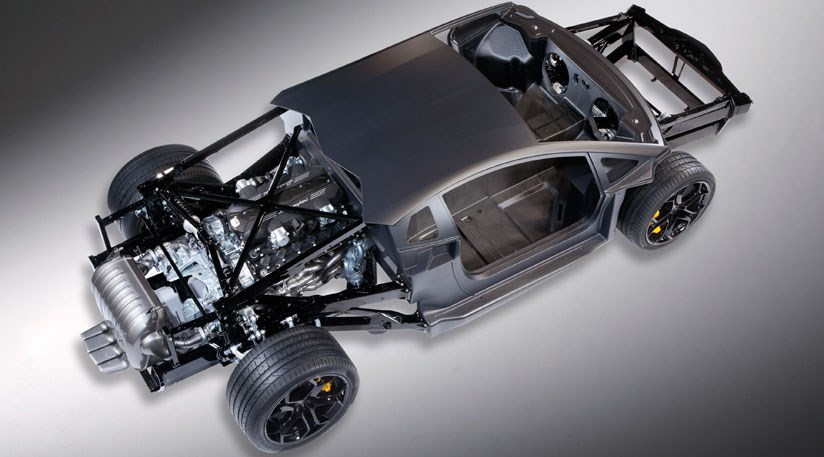
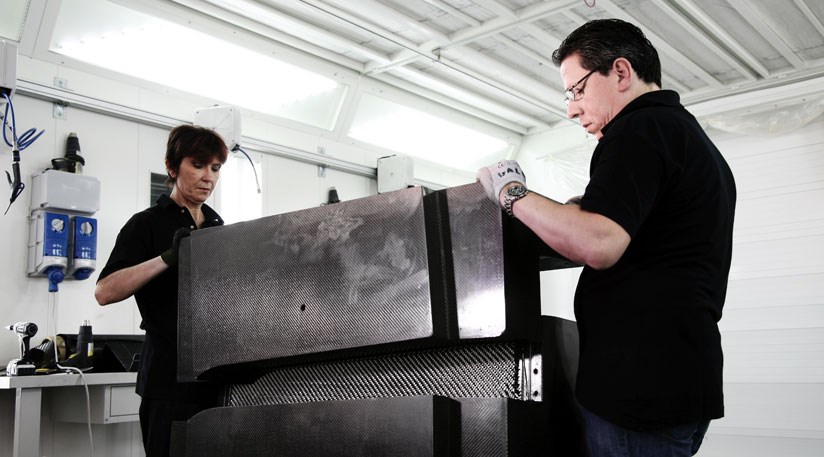
The new Lamborghini Aventador laid bare, spilling its carbon guts

Tomorrow's world: lightweight carbon composites

By Jesse Crosse
Motor Industry
10 October 2011 09:09
Once all the dust settles on The Great Battery Farce (the idea that the world's ills will be taken care of by sticking a battery in everything that moves and charging it up) we may eventually face up to the fact that the best way to move something around more economically, is to move less of it.
That means making things lighter, a lot lighter. Car makers are working on it and manufacturers like Audi and Jaguar have already become masters in bringing aluminium to the mass production. But the biggest prize in the battle against weight, carbonfibre, has yet to make it to the mainstream.

Carbonfibre: the holy grail?

Carbonfibre is not just a costly material, it is fabulously expensive to turn it in to something you can use. As things stand, making family cars from it by the million is no more practical than asking a posse of Hollywood starlets to knit them from gold thread.
Single carbon fibres are a lot thinner than a human hair but wound together and woven into matting much like any other common-or-garden fabric, they become useful. Impregnated with resin the two become a carbonfibre composite component, fantastically strong and spectacularly light, but there's a downside. The process involved is almost as labour intensive as sowing a field of wheat by hand. It's just not practical for mass production.

Inside Lamborghini's composite lair

Lamborghini is owned by Audi but is also working with Boeing to seriously develop carbonfibre for production cars. The Lamborghini Aventador needs no further introduction on these pages but the way in which it has been made is fascinating. I?ll go further and wager that in just a few years, some of the technology that lurks behind it will be helping to cart the shopping back from Tesco in a million Audi A1 ancestors.
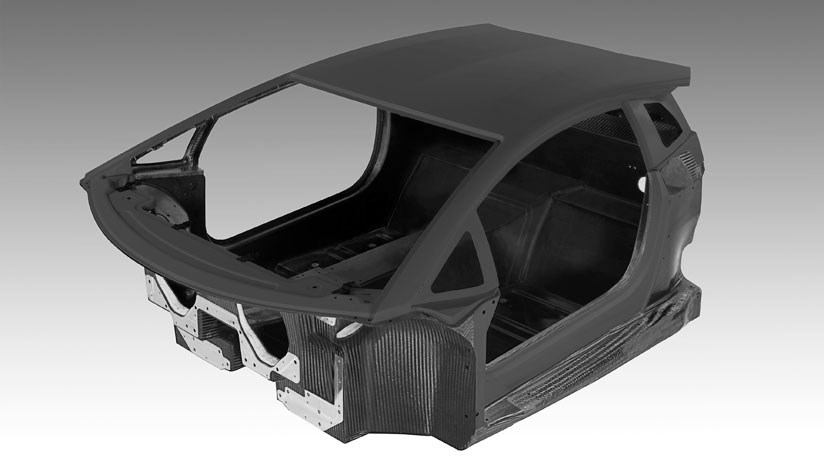
The Aventador consists of a carbonfibre tub front and rear-ended by aluminium spaceframes which support the suspension and powertrain. The tub is all carbonfibre but made by combining two distinctly different methods.

Prepreg carbonfibre: how it works

An odd name, short for 'pre-impregnated,' Prepreg is simply carbonfibre mat impregnated with resin. It's stored in a fridge like rolls of ready-made puff-pastry to stop it going off, then hand cut and laid into moulds. For strength, there can be no air bubbles so the whole lot is encased in a plastic bag and the air pumped out.
Then it's put in a huge oven called an autoclave and cooked under pressure to cure it. Prepreg is expensive but the best way to produce a shiny class-A finish, so only the top panels of the Aventador are made like this.

RTM-Lambo carbonfibre: Resin Transfer Moulding

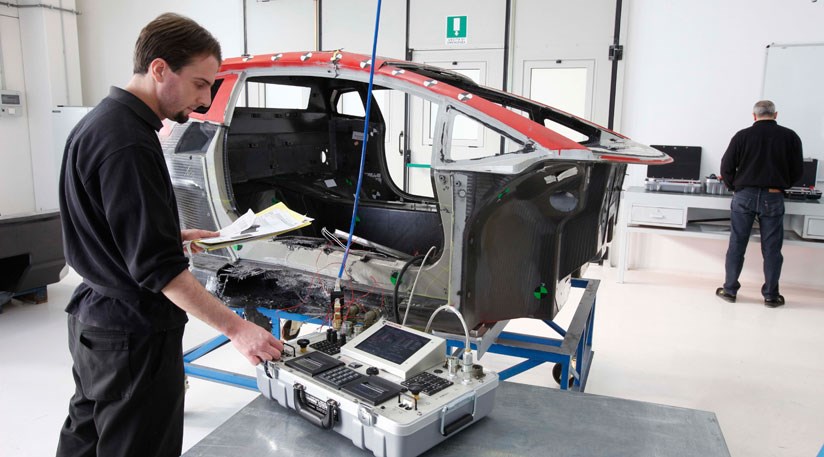
In its raw form the bottom half of the tub looks unprepossessing, boxy and not unlike something you might sit in at Alton Towers. It's made using the resin transfer moulding process (RTM) where carbonfibre mat is cut and laid in a large mould and 'pre-formed,' then it's assembled into another giant mould together with the Prepreg components made earlier, and resin is injected under pressure. What comes out is the complete, beautiful, monocoque complete with moulded-in metal brackets on which to bolt the suspension and engine frames.
It's in the combining of separate elements to make a whole where RTM-Lambo differs from 'normal' RTM. It also differs in using cheaper carbonfibre moulds rather than huge, massively expensive steel tools of the sort generally used in car production.
The carbonfibre tooling is only good for around 500 shots before wearing out which is no problem in supercar volumes. For larger volumes, steel would be used. But there's a more recent development at Lamborghini that could form the basis of future mainstream cars.

Forged composites: the new composite tech borrowed from golf

Sometimes solutions to the trickiest problems come from the most unlikely direction and who'd have thought a supercar maker and a golf club manufacturer may have found the secret to mass-producing carbonfibre cars? This technology has been developed in conjunction with US golf giant Calloway, which has replaced titanium with lighter Forged Composite in its latest golf club head, so players can drive golf balls further.
Forged composite is a mixture of carbon strands around 2in long, mixed with resin. It can be quickly injection moulded in a similar way to plastic garden furniture, is a third of the weight of titanium, much stronger, a crucial 30% cheaper than the RTM-Lambo method and cures or sets in minutes instead of hours.
Forged composite has already been used in the Sesto Elemento concept car and on a trip around Sant'Agata I tripped over an experimental Aventador tub made from it. The process was patented only in 2010 and is too late for the Aventador, though next-generation Lamborghinis will use it.
But perhaps more relevant to most of us, it is easy to imagine the bodyshell of a future, super-lightweight, low emission baby Audi made from it, manufactured much like that garden furniture, but hopefully, more comfortable to sit in.

CAR interviews Ferrari CEO Amedeo Felisa (2011)

Click Thumbnails to Enlarge

CAR interviews Ferrari CEO Amedeo Felisa (2011)

By Phil McNamara
Motor Industry
11 October 2011 10:28
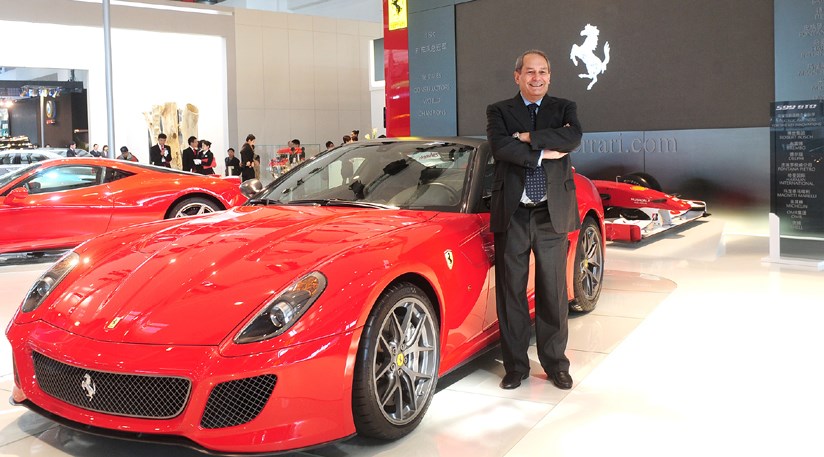
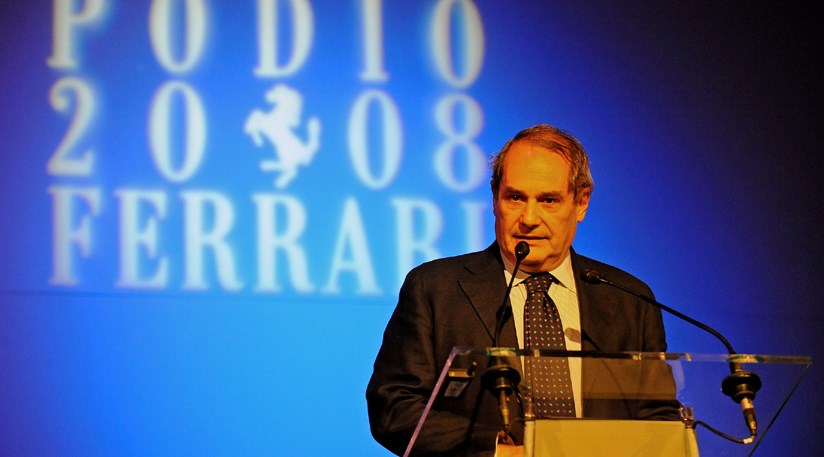
This week CAR is publishing a string of interviews with Ferrari management. Today we speak to Ferrari CEO Amedeo Felisa, a trained engineer who now runs Ferrari day-to-day. CAR’s October 2011 issue – on sale now – contains a VIP tour of Ferrari and interviews with the company’s top brass: president di Montezemolo, Ferrari CEO and engineer Amedeo Felisa and design chief Flavio Manzoni.
We covered so many fascinating topics that some great material could have finished up on the cutting room floor. Instead we’ll publish the full transcripts of the interviews this week. Read on for the full conversation with Felisa, and for the pictures of our access all areas visit, pick up the October issue of CAR (free digital preview here).

CAR: What did you make of the recent British tests pitching the 458 Italia against the McLaren 12C?

Amedeo Felisa: ‘We have very good results especially because it was UK journalists, we were expecting some comment veering in the direction of the McLaren. We were surprised.’

Do you really think the British media lack objectivity?

‘Well, only you British can find a certain level of performance in Aston Martins!’

Ferrari recently commissioned 50 design schools from around the world to design the hypercar of 2025. What did you make of the results?

‘This was the second time Ferrari has done such a competition. Last time the brief was more general and we got [a wide-ranging] perception of Ferrari from young people: some were speaking of F1 cars, some sedans, GT and so on. Perhaps our brief was too specific this time. We asked creative people: ‘think of the Ferrari [hypercar] 20 years from now’. It’s interesting to get the mind of people who are not connected [with Ferrari], what they think of the future for this special brand. The young often speak of green cars, for example.’

What other trends did you see?

‘The students concentrated on hyper technological performance cars. That’s probably the area where we have enough information and ideas!’

Ferrari has just launched the 458 Spider at Frankfurt. What can we expect from this car?

‘The 458 Spider is different to the 430 Spider, it has a rigid hard top. We decided several years ago that the Spider’s future was in that direction. Now it’s easier to make the development of the rigid hard top that in the past was really difficult; the technology is now in the hands of the designers. The problem in the past was the investment, the cost, due to the different linkage between the top and the body was very difficult, it needed lots of tests and tooling to prepare that. Now with new technology and our suppliers, we can do it. The top is totally is different from the California’s: it’s not as complex and the 458 Spider’s is two piece. Easier to move, quicker to open and close, and [needs less] space. I think it’s the first Spider with a rigid hard top [on a mid/rear engined car].’